
Industrial Fabrication and Inspection Support | BR Systems

Built to Hold. Managed to Move.
How BR Systems Supports Complex Industrial Projects From Fabrication Through Inspection
Complex industrial projects are rarely won on drawings alone.
They are won in fabrication shops, inspection meetings, pressure tests, vendor calls, and the dozens of decisions that happen after engineering is supposedly “finished.”
That is where projects either tighten up or start drifting toward delays, rework, and expensive field problems.
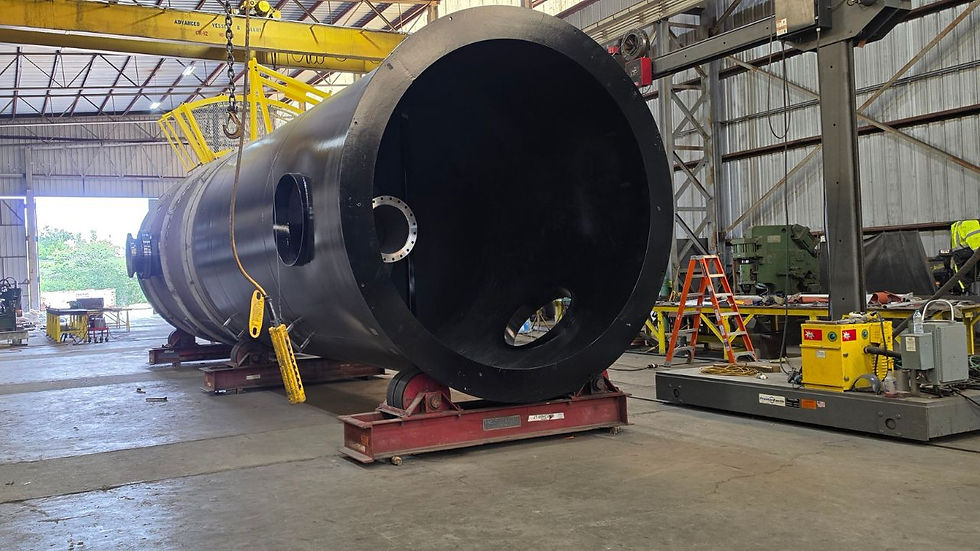
A recent vessel project in Georgia highlighted exactly why execution discipline matters.
As part of a larger industrial process system, the project involved a large fabricated tank tied into a skid-based package. The vessel stood approximately 40 feet tall and required close coordination between engineering teams, fabrication partners, inspection personnel, and the end client.
For BR Systems, the job was never just about supplying equipment.
It was about helping move a complicated industrial project from fabrication to field readiness without losing quality, accountability, or momentum along the way.
Industrial Projects Fail in the Gaps
Most industrial issues do not come from catastrophic design failures.
They come from gaps:
Misaligned nozzle placements
Poor fabrication tolerances
Missing installation provisions
Inspection oversights
Coordination breakdowns
Late-stage surprises discovered in the field
That is why detailed fabrication coordination matters early.
Before the tank entered production, teams worked through critical project details including:
Nozzle elevations and rotations
Electrical routing considerations
Safety tie-off points
Insulation provisions
Installation access
Lifting and rigging accommodations
Site constructability requirements
Those details may seem minor during design review meetings. They become major when equipment is being lifted, installed, connected, and commissioned in the field.
BR Systems approaches fabrication with the understanding that industrial equipment must work in reality, not just in drawings.
Inspection Is Where Accountability Becomes Visible

Once fabrication started, the project moved into inspection and verification phases.
The team traveled to Georgia for multiple inspection points requested by the client, including:
Internal weld inspections
Dimensional verification
Fabrication review
Hydrostatic testing support
One of the most valuable parts of the trip involved additional dimensional inspections beyond minimum project requirements.
The team verified:
Nozzle locations
Elevation accuracy
Rotational alignment
Weld consistency
Overall compliance with approved fabrication drawings
This level of oversight matters because fabrication issues discovered late become exponentially more expensive.
A missed dimension in the shop can become a delayed installation on-site. A small fit-up issue can become a
multi-day field correction. Strong inspection processes reduce those downstream risks before equipment ships.
That is part of how BR Systems helps protect project schedules.
Hydro Testing and Coded Vessel Readiness
The vessel also completed hydrostatic testing, one of the final steps required before certification approval.
During hydro testing, the vessel is filled with water and pressurized above operating conditions while inspectors monitor for leaks, pressure loss, or structural concerns.
If the vessel successfully maintains pressure, it advances through the ASME-coded vessel certification process.
For industrial customers, this is more than a technical checkpoint.
It is proof that the equipment has been reviewed, tested, documented, and validated before entering service.
BR Systems stays engaged through those high-accountability moments because field performance depends on what happens long before startup.
Solving Problems Without Creating Bigger Ones

No serious industrial project is completely frictionless.
During inspection, a weld profile issue was identified on a safety platform brace after hydro testing had already been completed.
Structurally, the issue was minor. Operationally, it still needed to be corrected properly.
At that stage, welding directly on the pressure boundary of the vessel was heavily restricted. Instead of allowing the issue to spiral into delays, major rework, or unnecessary costs, the team evaluated the situation, coordinated with fabrication personnel, and identified a compliant corrective path forward.
That type of problem-solving is where experienced industrial teams separate themselves.
Anyone can point at a problem.
The valuable partners are the ones who can solve it responsibly while keeping the project moving.
Built for the Hard Parts
Industrial projects rarely move in straight lines.
Schedules shift. Site readiness changes. Construction timelines move. Priorities evolve.
This project had its share of hurdles. But that is the reality of large-scale industrial work.
The difference is having partners who continue showing up when the project becomes difficult.
BR Systems brings fabrication awareness, inspection discipline, project coordination, and execution support to industrial systems that need to perform in the real world, not just look good in a submittal package.
Because the real work starts after fabrication begins.
And the strongest industrial teams are the ones that stay involved all the way through startup.
Need an Industrial Partner That Stays Involved After Fabrication Starts?
Talk to BR Systems about inspection support, project execution, and field-ready industrial systems.


Comments